
Table of Contents
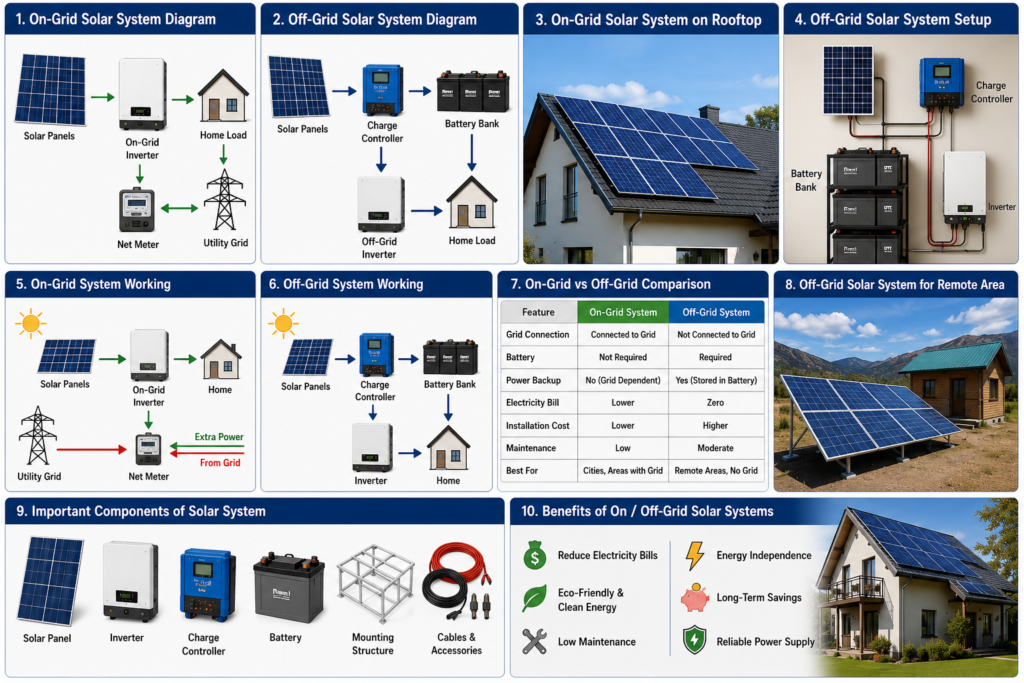
Electricity prices continue to rise, making it more important than ever to find cost-effective and sustainable energy solutions. One of the best ways to reduce electricity bills and become energy independent is by installing a solar power station. Whether you’re a homeowner, business owner, or farmer, investing in the right solar system can provide long-term savings while reducing your carbon footprint.
However, choosing between an On-Grid vs Off-Grid Solar Power Station can be confusing if you’re new to solar energy. Each system has its own advantages, installation requirements, and ideal applications.
In this comprehensive guide, you’ll learn how both systems work, their key components, and which option is best for your home or business. At Sunflare Solar, we help customers choose reliable, high-performance solar solutions tailored to their energy needs and budget.
What Is a Solar Power Station?
A solar power station is a complete energy system that converts sunlight into electricity using photovoltaic (PV) solar panels. The electricity generated can be used to power household appliances, commercial equipment, agricultural pumps, and industrial machinery.
Unlike traditional electricity that depends entirely on the power grid, a solar power station enables you to produce clean, renewable energy directly from your rooftop or available land.
Benefits of a Solar Power Station
- Reduce monthly electricity bills
- Generate clean and renewable energy
- Lower your carbon footprint
- Increase property value
- Enjoy long-term savings
- Require minimal maintenance
- Operate with appropriate care for at least 25 years.
Whether you choose an on-grid or off-grid system, a solar power station is a smart investment for both financial savings and environmental sustainability.
How Does a Solar Power Station Work?
A solar power station works by converting sunlight into usable electricity through a simple and efficient process.
Step-by-Step Process
- Solar panels capture sunlight and convert it into Direct Current (DC) electricity.
- A solar inverter converts DC electricity into Alternating Current (AC), which powers your electrical appliances.
- Your home or business uses the generated electricity first.
- Any excess electricity is either:
- Sent back to the utility grid through net metering (On-Grid System), or
- Stored in batteries for later use (Off-Grid System).
This process happens automatically every day, helping reduce electricity costs without producing harmful emissions.
Main Components of an On/Off Grid Solar Power Station
Every solar power station consists of several essential components that work together to generate reliable electricity.
1. Solar Panels
Solar panels are the heart of the system. Sunlight is absorbed by them and transformed into electrical energy.
Modern solar panels are designed to:
- Deliver high efficiency
- Perform well in different weather conditions
- Last 25–30 years
- Require minimal maintenance
2. Solar Inverter
The inverter converts DC electricity into AC electricity, making it suitable for powering everyday appliances.
A quality inverter improves:
- System efficiency
- Safety
- Energy management
- Overall performance
3. Mounting Structure
The mounting structure securely holds the solar panels on rooftops or ground-mounted installations.
A durable mounting structure should:
- Resist corrosion
- Withstand strong winds
- Maintain the correct panel angle for maximum sunlight exposure
4. ACDB & DCDB
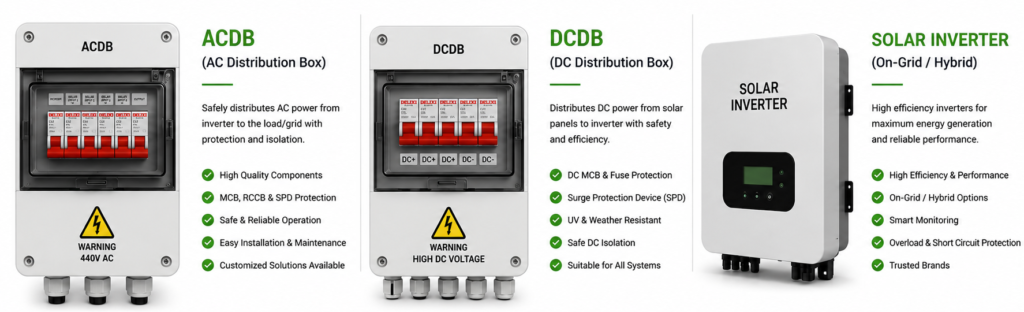
The AC Distribution Box (ACDB) and DC Distribution Box (DCDB) protect the system from electrical faults and improve operational safety.
They help protect against:
- Short circuits
- Overloads
- Voltage fluctuations
- Electrical surges
5. Solar Cables and Connectors
High-quality, UV-resistant cables connect the solar panels, inverter, and distribution boxes.
Benefits include:
- Reduced power loss
- Improved safety
- Longer system life
- Reliable electricity transmission
6. Earthing and Lightning Protection
A proper earthing system protects the solar installation from electrical leakage and lightning strikes.
This improves:
- User safety
- Equipment protection
- System reliability
7. Solar Battery (For Off-Grid Systems)
Solar batteries store excess electricity generated during the day so it can be used at night or during power outages.
They are essential for:
- Off-grid solar power stations
- Backup power
- Areas with unreliable electricity supply
Quick Overview of Solar Power Station Components
| Component | Function |
| Solar Panels | Generate electricity from sunlight |
| Solar Inverter | Converts DC to AC power |
| Mounting Structure | Supports solar panels securely |
| ACDB/DCDB | Protects the electrical system |
| Solar Cables | Connects all system components |
| Earthing System | Provides electrical safety |
| Solar Battery | Stores electricity for backup (Off-Grid) |
Why Are Solar Power Stations Becoming Popular?
The demand for solar energy continues to grow because it offers significant financial and environmental advantages.
Key Reasons
- ✔ Lower electricity bills
- ✔ Long-term return on investment
- ✔ Government subsidy opportunities
- ✔ Clean and renewable energy
- ✔ Low maintenance costs
- ✔ Energy independence
- ✔ Increased property value
- ✔ Reliable electricity generation
- ✔ Environmentally friendly solution
As more homeowners and businesses adopt solar energy, investing in a solar power station has become one of the most practical ways to achieve energy security and reduce operating costs.
What Is an On-Grid Solar Power Station?
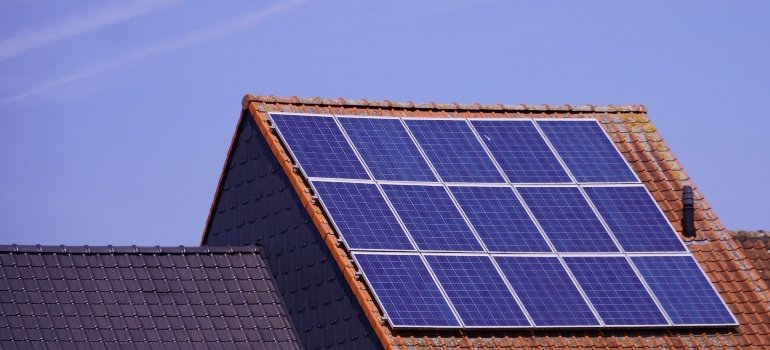
An On-Grid Solar Power Station is a solar energy system that is connected directly to the local electricity grid. It generates electricity from sunlight during the day and supplies power to your home or business. If your system produces more electricity than you consume, the extra energy is exported to the utility grid through net metering.
This is one of the most popular choices for urban homes and commercial buildings because it offers excellent savings without the need for battery storage.
How Does an On-Grid Solar Power Station Work?
The working process is simple:
- Solar panels absorb sunlight.
- Panels generate DC electricity.
- The solar inverter converts DC into AC electricity.
- Your home or business uses the generated electricity.
- Extra electricity is exported to the electricity grid through net metering.
- During the night or low sunlight, electricity is supplied from the utility grid.
Because there is no battery storage, the system automatically switches to grid power whenever solar production is low.
Advantages of an On-Grid Solar Power Station
- Lower installation cost
- No battery replacement expenses
- Reduced electricity bills
- Net metering benefits
- Higher return on investment (ROI)
- Low maintenance
- Environment-friendly energy generation
- Ideal for homes and businesses with reliable grid supply
Limitations of an On-Grid Solar Power Station
- No backup during power cuts
- Depends on grid availability
- Cannot operate independently during grid failures unless combined with battery storage
Best Applications
An on-grid solar power station is ideal for:
- Residential homes
- Apartments
- Offices
- Shops
- Schools
- Hospitals
- Commercial buildings
What Is an Off-Grid Solar Power Station?
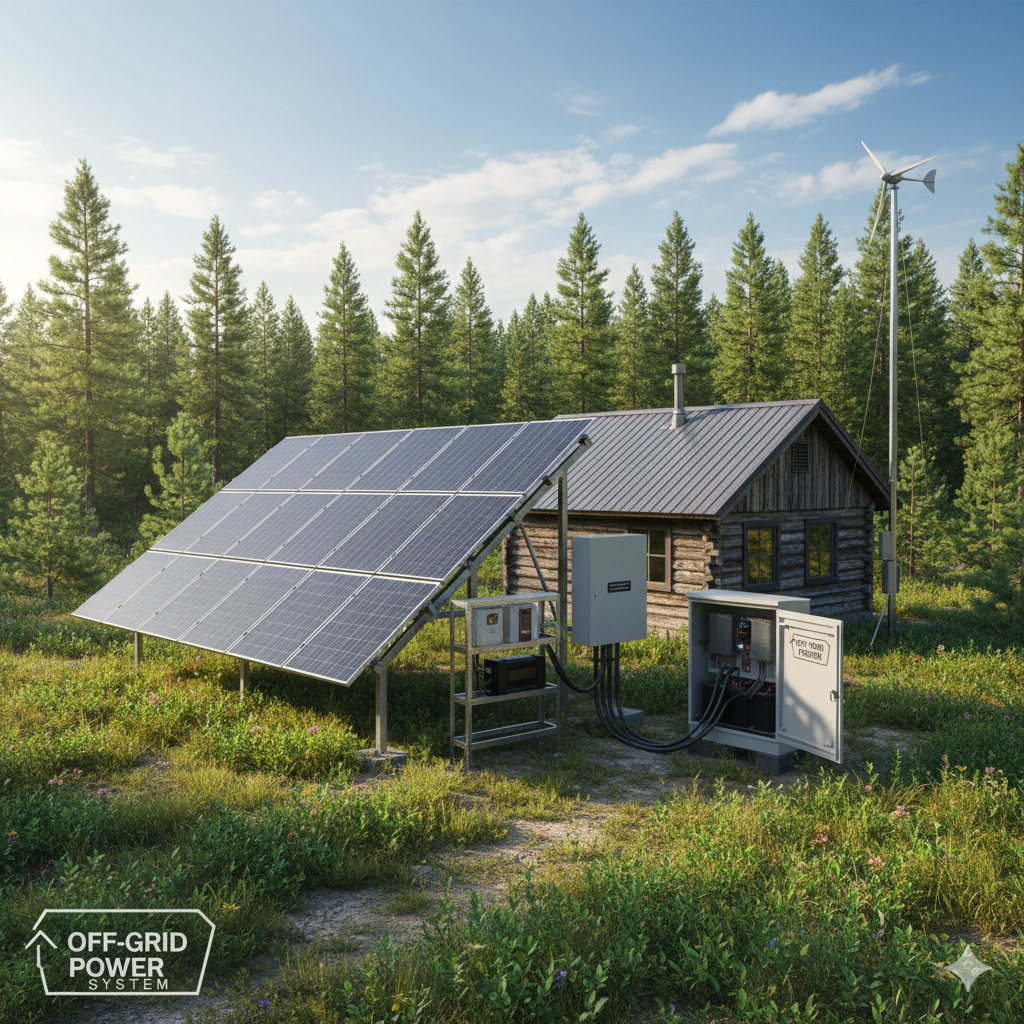
An Off-Grid Solar Power Station is a completely independent solar system that does not rely on the electricity grid. It uses battery storage to supply electricity during the night, cloudy weather, or power outages.
This system is commonly installed in locations where the electricity grid is unavailable or unreliable.
How Does an Off-Grid Solar Power Station Work?
The process includes:
- Solar panels generate electricity during daylight hours.
- The inverter converts DC electricity into AC electricity.
- Electricity powers your appliances.
- Extra electricity charges the battery bank.
- Stored electricity supplies power during the night or when sunlight is unavailable.
This allows users to enjoy continuous electricity without depending on the utility grid.
Advantages of an Off-Grid Solar Power Station
- Complete energy independence
- Reliable power during outages
- Ideal for remote areas
- Suitable for farms and agricultural applications
- No monthly electricity bills
- Battery backup available 24/7
Limitations of an Off-Grid Solar Power Station
- Higher initial investment
- Battery replacement after several years
- Requires more maintenance than on-grid systems
- Proper battery sizing is essential for uninterrupted power
Best Applications
An off-grid solar power station is recommended for:
- Rural homes
- Villages without grid electricity
- Agricultural farms
- Water pumping systems
- Telecom towers
- Resorts and remote cottages
- Construction sites
On-Grid vs Off-Grid Solar Power Station Comparison
| Feature | On-Grid Solar Power Station | Off-Grid Solar Power Station |
| Grid Connection | ✅ Yes | ❌ No |
| Battery Required | ❌ No | ✅ Yes |
| Backup During Power Cuts | ❌ No | ✅ Yes |
| Installation Cost | Lower | Higher |
| Maintenance | Low | Medium |
| Electricity Bills | Significantly Reduced | Eliminated (if correctly sized) |
| Net Metering | ✅ Available | ❌ Not Available |
| Best For | Urban Homes & Businesses | Rural & Remote Locations |
Benefits of Installing a Solar Power Station
Whether you choose an on-grid or off-grid system, a solar power station offers numerous long-term benefits.
Reduce Electricity Bills
Solar power helps lower your dependence on grid electricity, resulting in substantial monthly savings.
Long-Term Investment
Most high-quality solar systems have a lifespan of 25 years or more, making them a cost-effective investment.
Clean Renewable Energy
Solar power generates electricity without producing harmful emissions, making it an environmentally friendly choice.
Low Maintenance
Routine cleaning and periodic inspections are generally all that’s needed to keep the system performing efficiently.
Energy Independence
Off-grid systems provide complete independence from utility companies, while on-grid systems reduce reliance on purchased electricity.
Increase Property Value
Homes and commercial buildings with solar installations are often more attractive to buyers because of lower operating costs.
Government Incentives
Eligible homeowners may benefit from government subsidy programs, reducing the overall cost of installation.
Recommended Solar Power Station Size
Choosing the right system size ensures optimal performance and maximum savings.
| Monthly Electricity Consumption | Recommended System Size | Suitable For |
| Up to 200 Units | 1–2 kW | Small Home |
| 200–400 Units | 3 kW | Medium Home |
| 400–700 Units | 5 kW | Large Home |
| 700–1,000 Units | 6–8 kW | Villas & Large Homes |
| Above 1,000 Units | 10 kW+ | Commercial Buildings & Industries |
How to Select the Right Size
Consider the following factors:
- Monthly electricity consumption
- Available roof space
- Number of electrical appliances
- Future electricity needs
- Budget
- Need for battery backup
A professional energy assessment can help you choose the right capacity and avoid oversizing or undersizing your system.
Why Professional Installation Matters
Installing a solar power station is a long-term investment, so professional installation is essential.
A trusted solar installer ensures:
- Proper system design
- Maximum sunlight exposure
- Safe electrical connections
- Compliance with local regulations
- Efficient energy generation
- Long-term system reliability
- Warranty support and after-sales service
At Sunflare Solar, our experienced team provides customized on-grid and off-grid solar solutions using high-quality components, ensuring reliable performance and maximum savings for homes, businesses, and industrial projects.